
Catalystic Leader Development
Bring your best leadership to the role.
A new leadership role often asks something different of us. The behaviors and expertise that helped us succeed before may not be enough for the responsibilities we have now.
Catalystic Leader Development helps capable leaders become more intentional about the leadership their role requires, particularly during transitions into roles with broader responsibility or when they want to strengthen specific leadership behaviors.
This is not remedial work. It is about bringing more of
what you’re capable of to the work you’re responsible for.
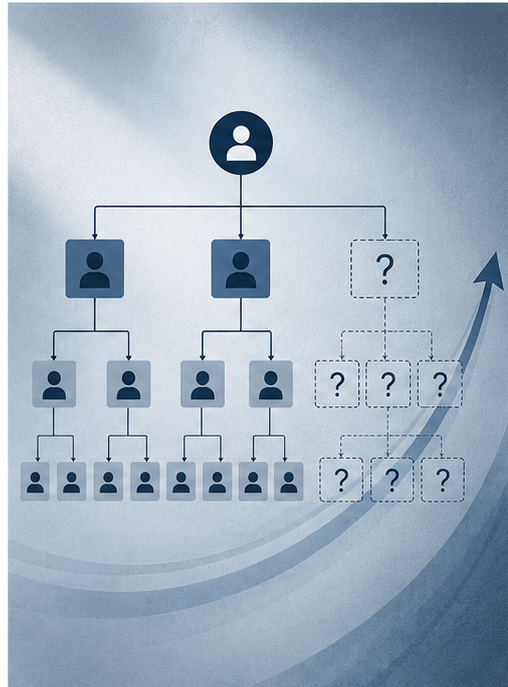
Development begins by widening the view.
Leaders see themselves from the inside. Everyone else experiences their leadership from the outside. Good development starts by exploring both.
Outside in
How do others experience my leadership?
Through confidential interviews with the leader’s manager, peers, direct reports, and other important stakeholders, we listen for patterns:
What does this leader do especially well?
Where could different behavior make the biggest difference?
What would help this leader be even more effective in the role?
What should the leader do more of, less of, or differently?
The purpose is not to produce a score. It is to gather useful perspective and feedforward from the people who experience the leader’s work.
Inside out
What is happening in me as I lead?
Coaching helps the leader examine the other side of the picture:
What am I trying to accomplish in this role?
What leadership habits come naturally to me?
What situations trigger reactions that may not serve me well?
What assumptions am I making?
What strengths do I want to use more deliberately?
What kind of leader do I want to become?

What are others experiencing from my leadership?
What is happening in me as I lead?
You don’t develop everything at once.
Stakeholder interviews and coaching will usually surface more than one useful area for development. The next step is to decide what matters most. Consider:
What others are telling me
What patterns show up across the interviews? Where is there strong agreement? Where are there useful differences in perspective?
What the role requires
What leadership behaviors would make the biggest difference in the work I am responsible for now?
What I want to become
Which changes matter to me personally? Where am I willing to make a real commitment to practice something different? How do I want to show up as a leader?
Choose one or two behaviors worth working on.
The goal is not to build a long development plan. It is to identify a small number of behaviors that are important enough to matter and specific enough to practice.
Examples might include:
Listening longer before advocating
Delegating decisions instead of retaining control
Addressing conflict more directly
Giving clearer feedback
Involving others earlier
Spending more time on longer-term priorities
Coaching rather than solving

What patterns matter most?
What does this role require from me now?
Where am I willing to commit to change?
Leadership behavior changes through practice.
Development becomes real when the leader begins trying something different in the work itself.
The goal is not to understand a new leadership behavior. It is to practice it often enough to learn what works, what feels difficult, and what others experience when I lead differently.
Practicing in the real work is the real work
The situations that matter become the development opportunities:
The meeting where I usually advocate too quickly
The decision I would normally keep for myself
The conflict I am tempted to avoid
The employee problem I would normally solve
The conversation where clearer feedback is needed
The week when urgent work begins crowding out longer-term priorities
Bring stakeholders into the process
The people who provided the initial perspective can also help the leader develop.
Tell them what you are working on. Ask them to notice. Invite feedforward.
That makes development observable and gives the leader feedback while there is still time to adjust.
Use coaching to learn from the practice
Coach and leader regularly step back and ask:
What did I try?
What happened?
What did others experience?
What am I learning?
What will I try next?

Try something different.
Notice what happens.
Ask what others experienced.
Adjust and try again.
Perspective changes what the leader sees. Practice changes the leader.
The goal is not a better leadership score or a list of things to fix. The goal is a leader who becomes increasingly capable of leading their own growth. Over time, the leader develops a repeatable habit:
Notice more.
Pay attention to how others experience my leadership and what is happening in me.
Choose deliberately.
Decide where a change in behavior could make the biggest difference.
Practice intentionally.
Try something different in the real work.
Learn from reality.
Notice what happened, invite feedback, and adjust.

What am I seeing? | What matters most? | What will I try?
The aim is not simply to become more effective in this role. It is to become more capable of growing into the roles and challenges that come next.
Start with a conversation.
The first step is an introductory conversation—not a commitment to an engagement.
We’ll talk about the role, what has changed or is changing, and how you want to grow as a leader. Together, we can decide whether Catalystic Leader Development is the right fit.
Four-Month Catalystic Leader Development Engagement — Starting at $7,500
Explore
Identify the leadership context and stakeholders
Up to ten confidential stakeholder interviews
Use the early coaching sessions to explore the leader’s own perspective
Evaluate
Synthesize themes from the interviews
Consider what the role requires
Choose one or two leadership behaviors worth working on
Act
Eight individual coaching sessions across four months
Practice new behaviors in the real work
Engage stakeholders for ongoing feedback and feedforward
Learn, adjust, and continue practicing
What does your role require from you now?
You do not need to arrive with a defined leadership goal. Start with the role, the transition, or the opportunity in front of you, and we can decide together whether this approach would be useful.