
The Catalystic Perspective
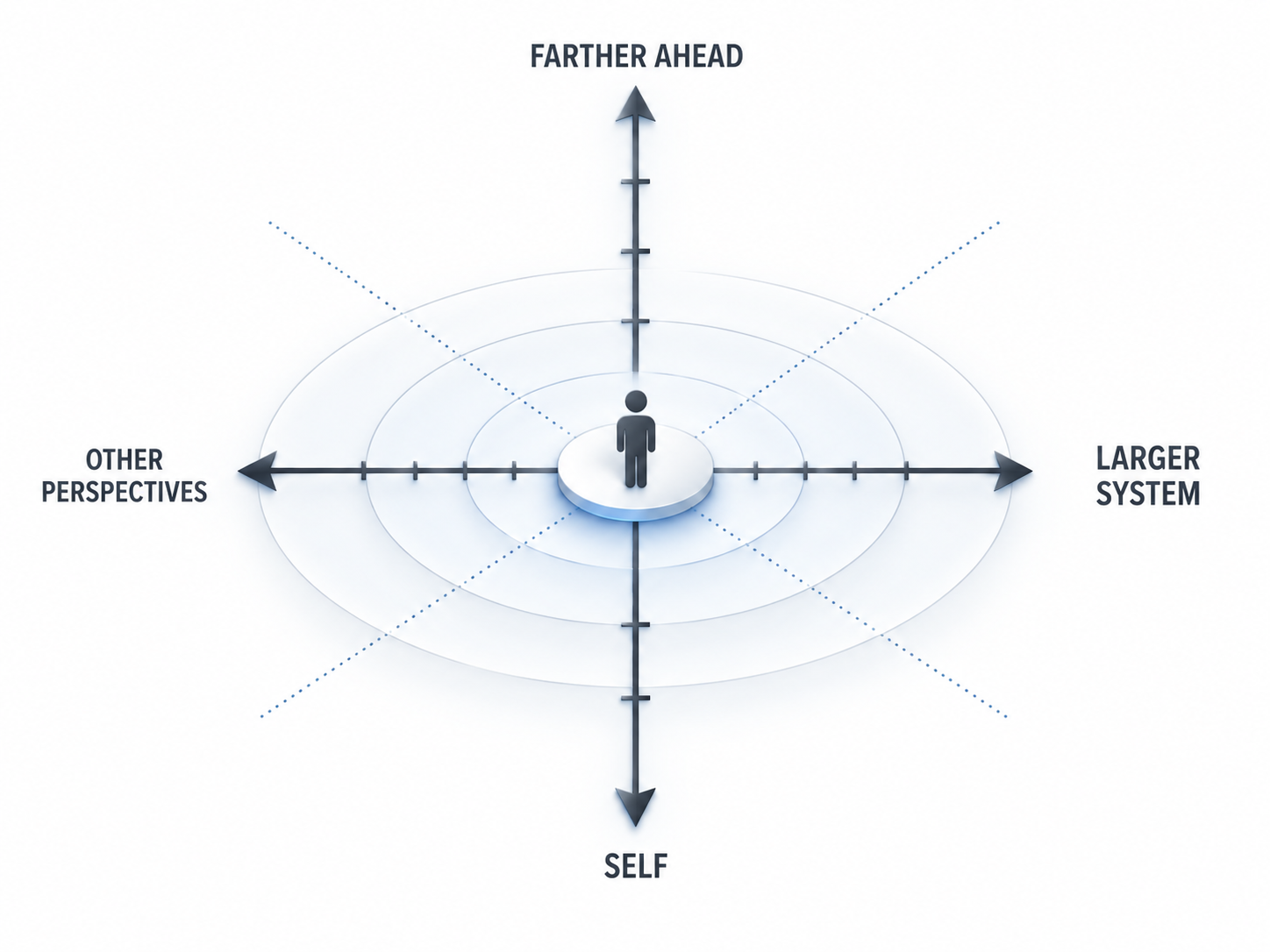
When expertise isn’t enough, move your perspective.
A different answer often begins by looking at the challenge from somewhere other than where you are standing.
Four directions can open the question:
Farther ahead · Other perspectives · Larger system · Self
Explore The Four Movements ↓
Four ways to move your perspective
When the answer isn’t clear, move far enough from the immediate problem to see something new.
Farther ahead
What changes if we look farther ahead?
Look beyond the immediate consequence. What matters months, years, or decades from now?
Other perspectives
Who sees this differently?
Include the people affected by the challenge—not only the people currently defining it.
Larger system
What larger system are we part of?
Look beyond the event to the processes, incentives, structures, culture, and patterns producing it.
Self
What is happening in me?
Notice the assumptions, fears, hopes, attachments, or identity needs affecting what you can see.
What happens when these perspectives reveal competing needs? ↓
Standing Conflicts
Moving perspective does not always reveal a single right answer. Sometimes it reveals a tension between two legitimate needs that must be managed over time. These standing conflicts are often the work of leadership.
Short Term
vs.
Long Term
Standardization
vs.
Flexibility

Explore
vs.
Exploit
Speed
vs.
Inclusion

Central Control
vs.
Local Autonomy
Deliver Results
vs.
Build Capacity
Leaders get stuck when they treat one side as right and the other as wrong. Progress comes from understanding what each side protects, when each is needed, and how to move between them deliberately.
The goal is not permanent balance. It is wise movement between competing needs.
Explore A Practical Example ↓
A Practical Example
Perspective matters when it changes what leaders see, how they judge, and what they do next.
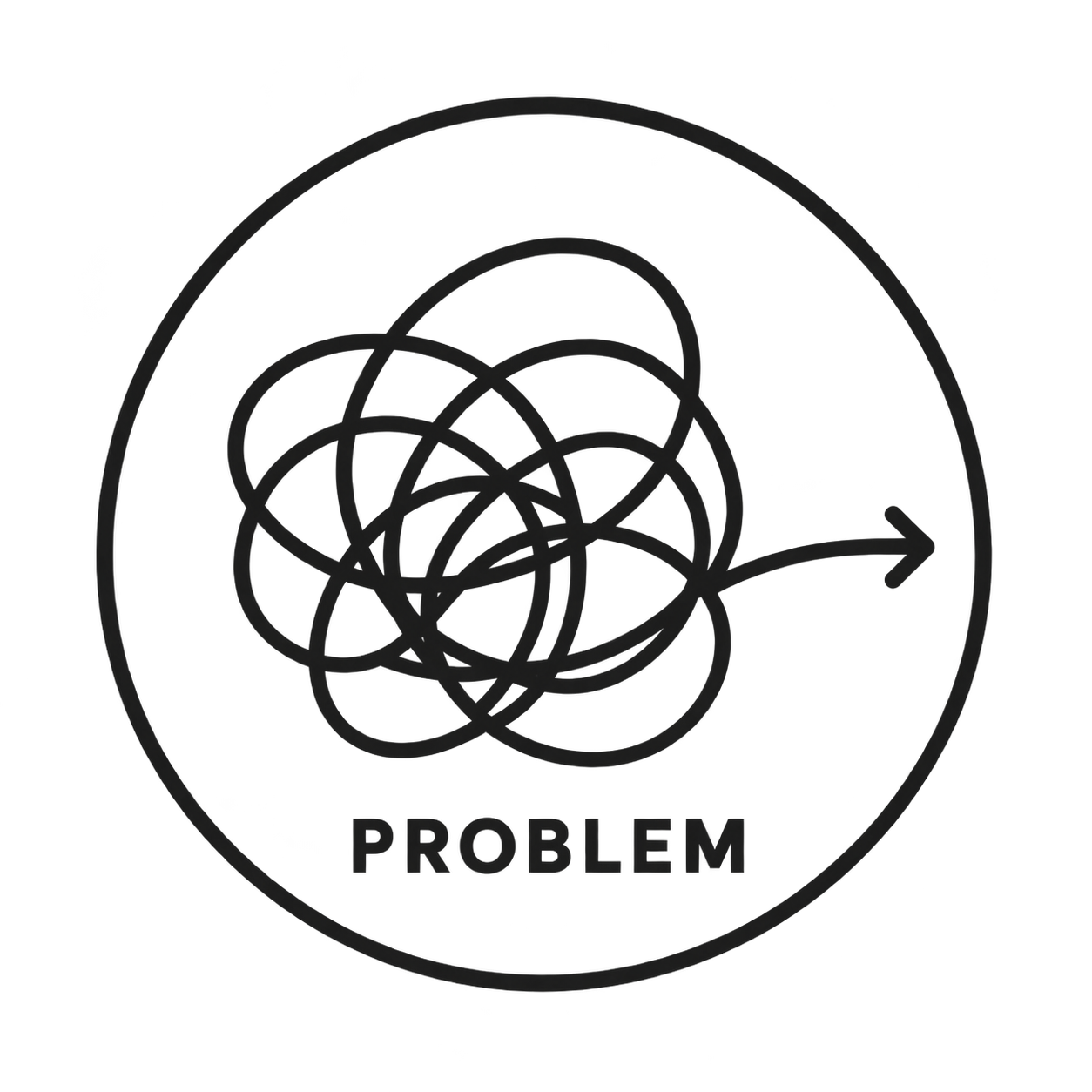
An Apparent Problem
A leadership team believes it has an execution problem.
Projects are delayed, accountability is inconsistent, and leaders are frustrated.
The obvious response is tighter project management and stronger accountability.

Broaden the View
Farther ahead: Quarterly pressure is crowding out capability building.
Other perspectives: Functional leaders do not trust one another enough to surface problems early.
Larger system: The operating system rewards local optimization rather than enterprise results.
Self: Frustration with missed commitments is pushing leaders toward greater control.

A Better Judgement
The team does not simply need stronger project management.
It is dealing with connected tensions:
Short-term results vs. long-term capability
Functional success vs. enterprise success
Accountability vs. trust
A broader view changes the diagnosis—and therefore the work.

Act — and Learn
Rather than launch another broad execution initiative, the team tests targeted changes in how risks are surfaced, cross-functional work is reviewed, and enterprise outcomes are rewarded.
What do we expect to happen?
How will we know?
What does reality teach us?
A broader perspective changes the work.
The Deeper Purpose
The Catalystic Perspective is more than a way to work through a challenge. It helps leaders develop the habits of thinking they need when expertise alone isn’t enough.
Leaders Practice
Pausing before reacting
Asking better questions
Moving beyond their own perspective
Seeing patterns and larger systems
Recognizing competing needs
Examining what is happening in themselves
Exercising judgment without requiring certainty
Acting, learning, and adjusting
See more.
Judge wisely.
Act and learn.
The aim is not simply to solve the challenge in front of us. It is to become more capable of navigating the challenges that come next.
Perspective changes the decision. Practice changes the leader.

What challenge are you trying to navigate?
You do not need to have the problem fully defined. Bring the challenge as it is, and together we can clarify what matters, widen the perspective, and identify the next useful step.